Oedema (Edema) Causes, Symptoms & the Best Ayurvedic Treatment in Abu Dhabi, UAE
- What is oedema (water retention)?
- What causes oedema?
- Common symptoms and when to see a doctor
- How Ayurveda understands oedema (Shotha)
- Oedema by dosha type
- Ayurvedic treatment for oedema in Abu Dhabi
- Ayurvedic herbs used for oedema
- Diet and natural ways to reduce water retention
- Frequently asked questions
Have you noticed swelling in your feet, ankles, hands, or face that doesn't fully go down overnight? You're not alone — and you're not imagining it. This is oedema, called edema in American English, and it's one of the most common reasons people in the UAE search for natural relief from puffiness and heaviness in their limbs.
Dubai and Abu Dhabi's climate, long working hours, and high-salt convenience food culture all make water retention more common here than people realize. The good news: while conventional medicine manages the symptom, Ayurvedic therapy works on the root cause — digestion, circulation, and the body's fluid-balancing systems — for relief that lasts longer than a diuretic tablet.
What Is Oedema? Understanding Water Retention
Oedema (or edema — the spelling simply depends on whether you learned British or American English; both refer to the exact same condition) happens when excess fluid leaks out of small blood vessels and accumulates in the soft tissue around it. A small amount of swelling after a long flight or a salty meal is usually harmless. Swelling that persists, returns daily, or spreads is your body signalling that something needs attention.
Common areas affected by oedema
- Feet and ankles — the most common site, especially after standing or sitting for long periods
- Legs and calves — often heavier by evening
- Hands and fingers — rings feeling tight is an early sign
- Face and eyelids — puffiness most visible after waking
- Abdomen — can indicate a more significant underlying issue and warrants medical review
Types of oedema
Not all swelling is the same. Recognizing the type helps explain why it's happening and how urgently it needs attention:
- Peripheral oedema — the most common type, affecting the feet, ankles, legs, and hands
- Pitting oedema — pressing the skin leaves a visible indentation that slowly fills back in
- Non-pitting oedema — skin springs back immediately; often linked to lymphatic or thyroid-related causes
- Pulmonary oedema — fluid accumulation in the lungs, causing breathlessness; requires urgent medical care
- Lymphedema — caused by impaired lymphatic drainage rather than circulatory issues
- Cerebral oedema — swelling around brain tissue, always a medical emergency
- Macular oedema — fluid buildup in the eye, usually linked to diabetes
This article focuses primarily on peripheral oedema — the swelling in feet, legs, hands, and face that responds well to Ayurvedic management. Pulmonary, cerebral, and macular oedema require medical diagnosis and treatment first.
How oedema affects daily life
Beyond the visible swelling, people living with ongoing oedema often describe reduced mobility, a constant feeling of heaviness, difficulty fitting into shoes or rings by the end of the day, and the quiet frustration of a body that doesn't feel like their own. Left unmanaged, it can also disrupt sleep and exercise routines — which, left unaddressed, can make the underlying imbalance worse.
What Causes Oedema?
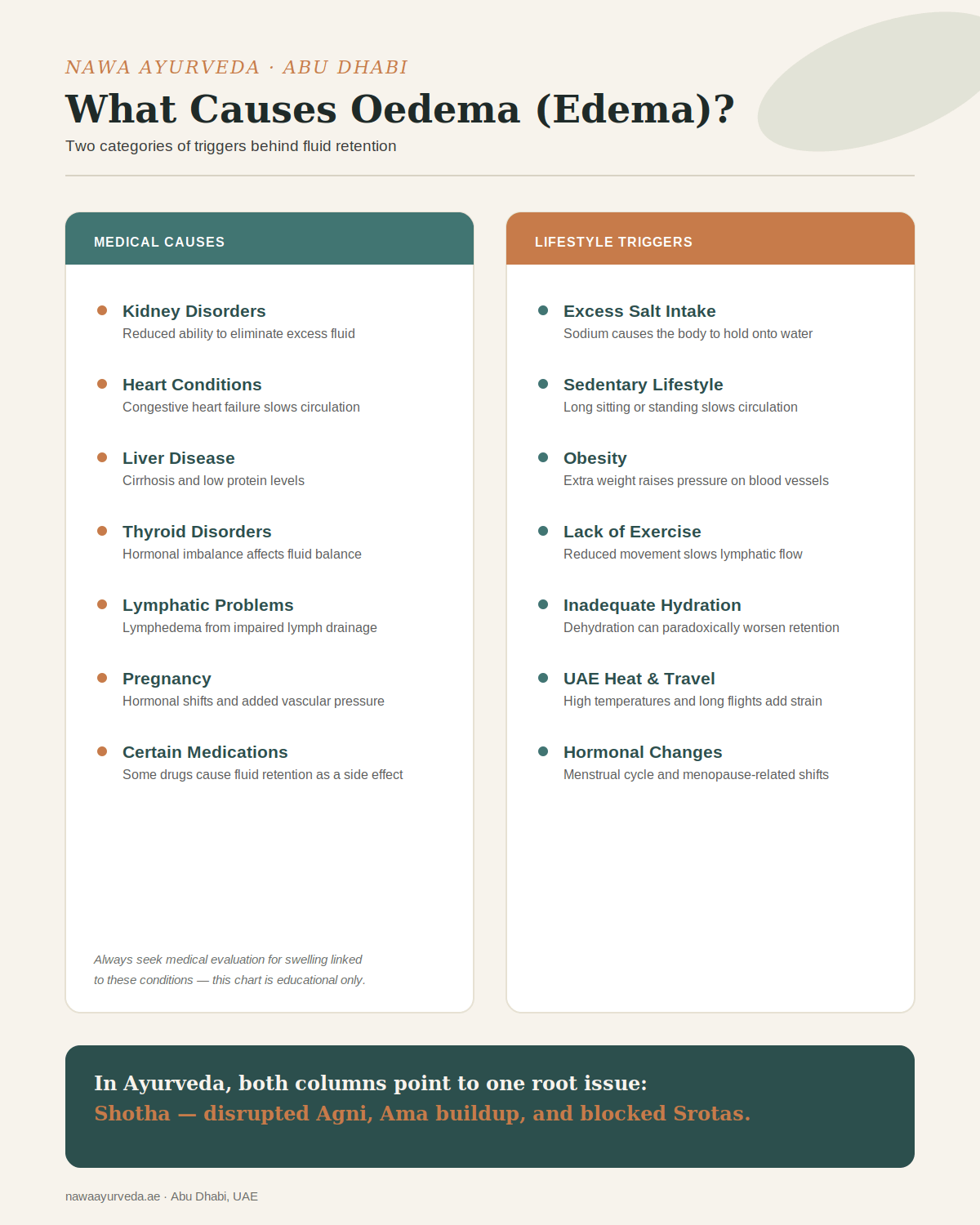
Oedema causes generally fall into two buckets: medical conditions that affect how the body regulates fluid, and lifestyle factors that make fluid retention more likely even in an otherwise healthy person. The infographic below breaks both down clearly.
Download this infographic
Medical conditions linked to oedema
- Kidney disorders — including chronic kidney disease, which impairs the body's ability to eliminate excess fluid
- Heart conditions — congestive heart failure reduces circulation efficiency, allowing fluid to pool
- Liver disease — cirrhosis and protein deficiency disrupt the pressure balance that normally keeps fluid inside blood vessels
- Thyroid disorders — hormonal imbalance can directly affect how the body manages fluid
- Lymphatic system problems — including lymphedema, where impaired lymph drainage causes localized swelling
- Venous insufficiency — when leg veins struggle to return blood to the heart efficiently, blood pools and fluid leaks into surrounding tissue
Lifestyle factors that trigger water retention
- Excess salt consumption — sodium causes the body to hold onto water
- Sedentary lifestyle — long hours at a desk or in a car reduce circulation efficiency
- Obesity — added weight increases pressure on blood vessels in the lower body
- Lack of exercise — movement is what drives lymphatic fluid back into circulation
- Inadequate hydration — counterintuitively, being under-hydrated can make the body retain water more aggressively
- UAE heat and frequent travel — both heat and long flights are well-documented contributors to temporary swelling
Other contributing factors include pregnancy, certain medications, and hormonal changes around menstruation or menopause.
Medication-induced oedema
Several common medications can cause fluid retention as a side effect, including:
- Blood pressure medications — particularly calcium channel blockers
- Steroids — corticosteroids are well documented to cause sodium and water retention
- Hormonal medications — including some contraceptives and hormone replacement therapy
- Anti-inflammatory drugs — regular NSAID use can contribute to swelling in some people
If you suspect a medication is causing your swelling, don't stop it on your own — speak with the prescribing doctor first, and mention it during your Ayurvedic consultation so your treatment plan accounts for it.
Pregnancy and oedema
Mild swelling in the feet and ankles is common during pregnancy due to increased blood volume and hormonal shifts that relax vein walls. It typically resolves after delivery. However, sudden or severe swelling — especially in the hands and face, paired with headaches or vision changes — needs immediate medical attention, as it can signal preeclampsia.
Common Symptoms of Oedema — and When to See a Doctor
Early signs
- Mild swelling in the feet and ankles by evening
- Puffy hands and fingers, especially noticeable with rings
- Slight facial swelling on waking
- Shoes or clothing feeling tighter than usual
Advanced symptoms
- Pitting oedema — pressing the skin leaves a visible indentation that takes time to disappear
- Persistent heaviness in the legs
- Joint stiffness
- Difficulty walking comfortably
- Rapid, unexplained weight gain
| Pitting Oedema | Non-Pitting Oedema |
|---|---|
| Pressing the skin leaves a visible dent that slowly fills back in | Skin springs back immediately after pressing |
| Usually linked to fluid-based causes (heart, kidney, venous issues) | Often linked to lymphatic or thyroid-related swelling |
| More common in legs and ankles | Common in conditions like lymphedema or myxedema |
Oedema According to Ayurveda: Understanding Shotha
Ayurveda has a specific term for swelling: Shotha. Rather than treating it as an isolated symptom, classical Ayurvedic texts trace Shotha back to three interconnected root causes:
- Impaired Agni (digestive fire) — when digestion is weak, the body cannot fully process what it takes in
- Ama formation — undigested metabolic waste accumulates and disrupts normal tissue function
- Blocked Srotas (body channels) — circulation and fluid-transport pathways become obstructed
Underlying all three is a dosha imbalance — Vata, Pitta, or Kapha — which shapes exactly how the swelling presents in each individual.
Oedema by Dosha Type
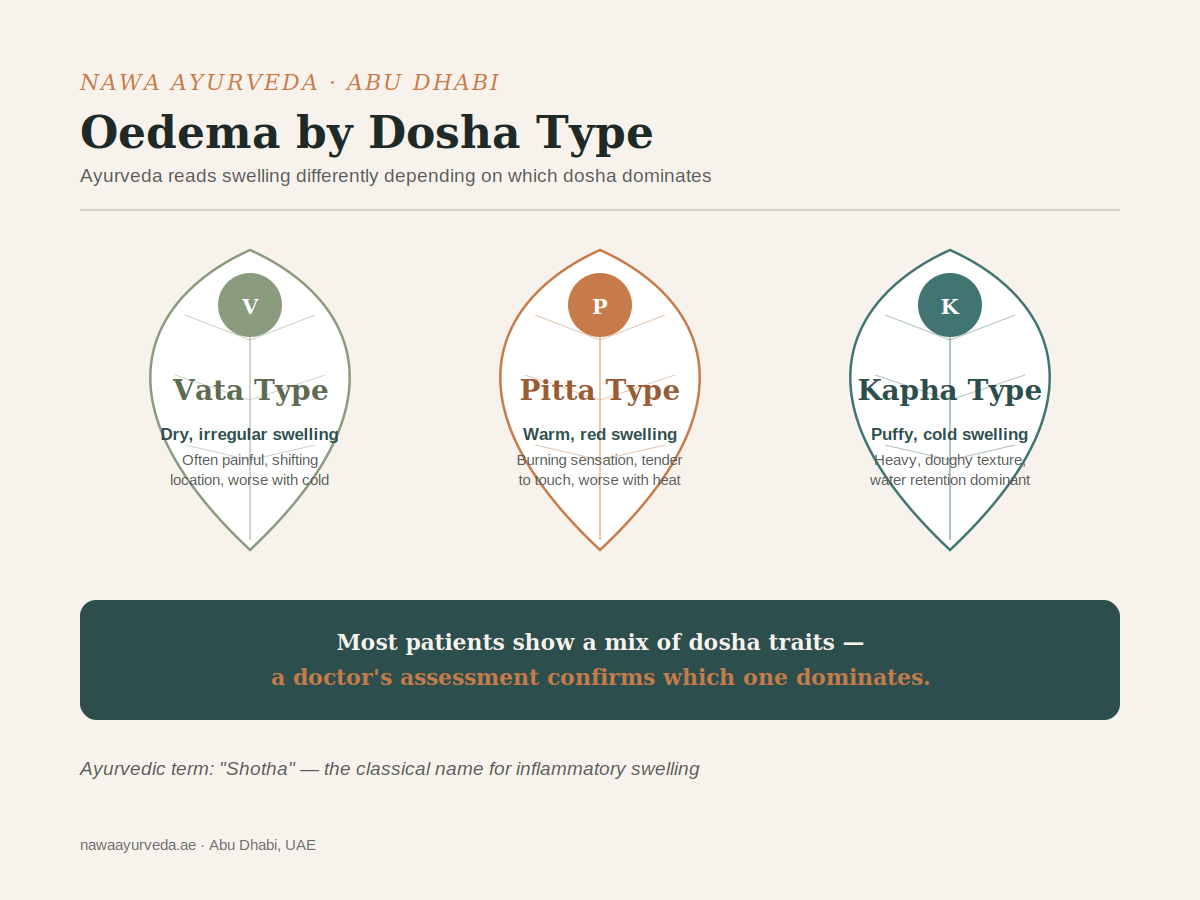
One reason two people with "the same" swelling can need very different treatment plans is that Ayurveda reads the quality of the swelling, not just its presence.
Download this infographic
- Vata-type oedema — dry, irregular, often painful swelling that shifts location and worsens in cold weather
- Pitta-type oedema — warm, red, burning swelling, tender to the touch, that worsens with heat
- Kapha-type oedema — cold, puffy, heavy swelling with a doughy texture — the type most associated with classic "water retention"
Most patients present with a mix of these traits, which is exactly why a proper consultation with an experienced Ayurvedic doctor matters more than following generic advice.
How Ayurvedic Diagnosis Works
Before recommending any therapy, a qualified Ayurvedic physician builds a complete picture through:
- Dosha analysis — identifying your Prakriti (natural constitution) and which dosha is currently out of balance
- Pulse diagnosis (Nadi Pariksha) — a traditional method used to assess internal imbalances
- Digestive health assessment — since impaired Agni is considered central to Shotha
- Lifestyle evaluation — diet, activity levels, sleep, and stress, all of which influence fluid balance
- Medical history review — including any existing heart, kidney, liver, or thyroid conditions, and current medications
This assessment identifies whether the root cause is primarily digestive imbalance, metabolic dysfunction, an organ-related disorder, or a lifestyle trigger — and shapes everything that follows.
Best Ayurvedic Treatment for Oedema in Abu Dhabi & the UAE
Ayurvedic treatment for oedema is built around treatment objectives rather than a single fixed protocol: reducing fluid accumulation, improving circulation, strengthening digestion, supporting natural detoxification, and rebalancing the dominant dosha.
Core Ayurvedic therapies used for oedema management
- Abhyangam (medicated oil massage) — supports circulation, promotes lymphatic drainage, and reduces the feeling of heaviness in the limbs
- Udvarthanam (herbal powder massage) — particularly useful where obesity contributes to fluid retention; supports metabolism
- Swedana (herbal steam therapy) — encourages sweating and supports detoxification
- Panchakarma therapies — including Virechana (cleansing therapy for toxin elimination) and Basti (used where Vata imbalance is dominant), customized after a full patient assessment
- Nasya — nasal administration of herbal oils, used in select cases involving facial or head-related swelling
- Raktamokshana — a bloodletting therapy considered only in specific inflammatory presentations, under close physician supervision
At Nawa Ayurveda's clinic in Abu Dhabi, every plan begins with a detailed consultation to understand your health history, lifestyle, and body constitution (Prakriti) before any therapy is recommended — because a treatment that works beautifully for Kapha-type swelling can do very little for Vata-type swelling.
Looking for broader wellness support alongside treatment?
Many patients managing oedema also benefit from our wellness treatments and structured Ayurvedic programs, which combine therapy, diet guidance, and lifestyle coaching into one plan.
Ayurvedic Herbs Commonly Used for Oedema
- Punarnava — traditionally used for fluid retention; supports healthy kidney function
- Gokshura — supports urinary tract health
- Varuna — supports healthy fluid metabolism
- Musta — supports digestive health, addressing Ama at its source
- Triphala — a classical formula that promotes gentle detoxification
- Dry ginger — improves circulation and supports digestion
Herbal medicines should only be taken under the guidance of a qualified Ayurvedic doctor. Self-prescribing herbs — even "natural" ones — without an assessment of your dosha and underlying condition can do more harm than good.
Diet and Natural Ways to Reduce Water Retention
Simple daily habits
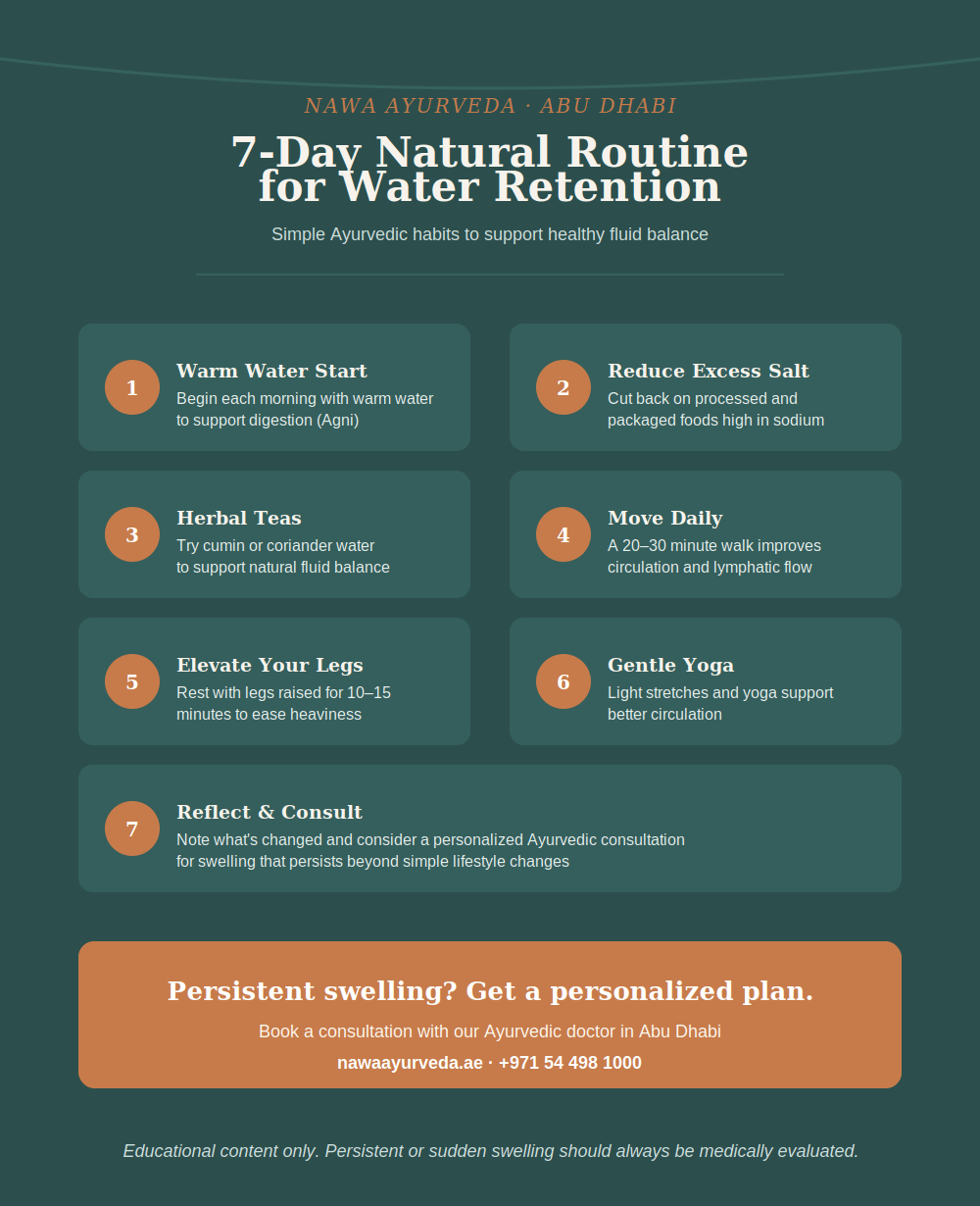
- Start your day with warm water to support Agni
- Drink herbal teas — cumin water and coriander water are both traditional choices
- Reduce excess salt intake, particularly from processed and packaged foods
- Stay physically active with regular walking
- Elevate your legs for 10–15 minutes when resting
- Practice gentle yoga for better circulation
- Maintain a healthy body weight
Foods to include
- Hydrating fruits: watermelon, pomegranate, papaya
- Vegetables: bottle gourd, cucumber, ash gourd
- Whole grains: barley, millets
- Herbal drinks: cumin water, coriander water
Foods to avoid
- Processed and deep-fried foods
- Excess dairy products
- Refined sugar
- Carbonated beverages
- Excess salt
Download this poster
Why Choose Nawa Ayurveda for Oedema Treatment in Abu Dhabi?
- Experienced Ayurvedic physicians who begin every plan with a full consultation, not a generic protocol
- Authentic Ayurvedic therapies including Abhyangam, Udvarthanam, Shirodhara, and Panchakarma-based treatments
- Personalized treatment programs based on your individual dosha and health history
- A holistic approach that addresses root causes rather than only managing symptoms
- A trusted clinic in the heart of Abu Dhabi, serving patients across the UAE
Explore our full range of Ayurvedic therapies, learn more about our clinic and physicians, or read what patients say on our reviews page.
Frequently Asked Questions
Achieve Better Health with Ayurvedic Care for Oedema
Oedema is often a sign that the body's fluid balance has been disrupted — by digestion, circulation, diet, or an underlying condition that deserves attention. While conventional treatment focuses on managing the symptom, Ayurveda works to identify and correct what's driving it. Through personalized therapies, herbal support, diet adjustments, and lifestyle changes, it's possible to support healthy circulation and lasting fluid balance rather than chasing temporary relief.
Book an Ayurvedic Consultation in Abu Dhabi
Get a personalized assessment and treatment plan to help reduce swelling, improve circulation, and support your overall well-being — the natural way.
Book Your Appointment