
How Ayurveda Addresses the 'Root Cause' of Insulin Resistance
In modern medicine, insulin resistance is often viewed as a precursor to Type 2 Diabetes, managed primarily through glucose-lowering medications and calorie counting. While these methods are effective at controlling blood sugar levels, they often fail to answer the most critical question: Why did the body stop responding to insulin in the first place?
Ayurveda, the 5,000-year-old science of life, offers a profound shift in perspective. Instead of merely managing the symptoms, Ayurveda identifies and treats the Samprapti (pathogenesis) of the condition, focusing on metabolic fire, toxic accumulation, and elemental balance.
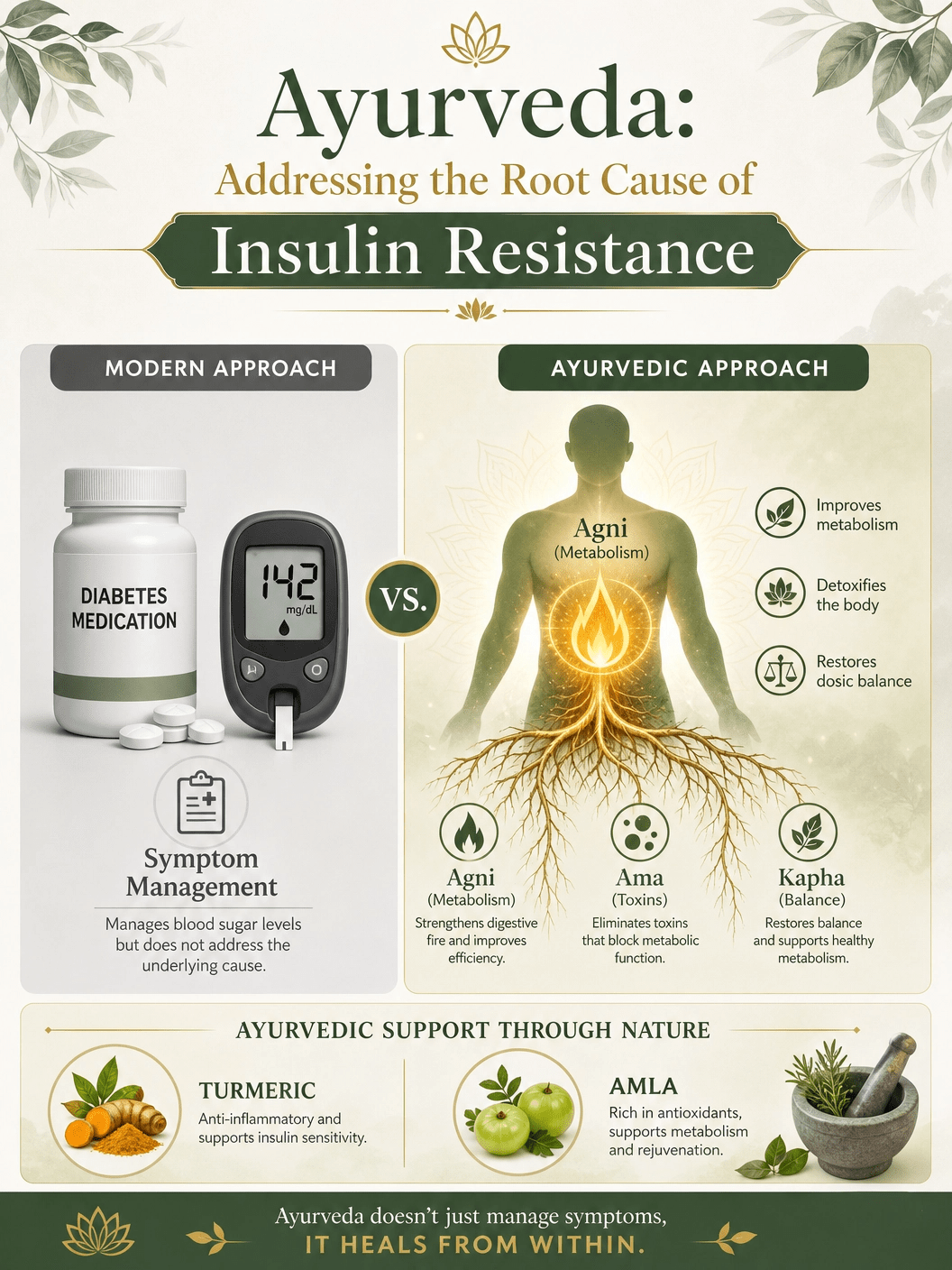
Infographic: Understanding the Ayurvedic Root Cause Analysis
The Ayurvedic Perspective: Beyond Blood Sugar
In Ayurveda, insulin resistance is closely linked to Prameha, a group of urinary disorders that include diabetes. The root cause isn't just "high sugar"; it is a systemic metabolic failure involving three core pillars:
1. Agni Mandya (Weakened Digestive Fire)
Your Agni is the biological fire responsible for all metabolic processes. When Agni is weak, the body cannot properly transform food into energy. In the context of insulin resistance, this means the glucose (fuel) isn't being "burned" or recognized correctly by the cells, leading to its accumulation in the bloodstream.
2. Ama (Metabolic Toxins)
When food is incompletely digested due to weak Agni, it creates Ama—a sticky, toxic byproduct. Ama clogs the Srotas (micro-channels) of the body. When these channels are blocked, insulin cannot reach the cell receptors, and the cells cannot "hear" the signal to take in glucose. This is the physical manifestation of "resistance."
3. Kapha Imbalance
Insulin resistance is predominantly a Kapha disorder. Kapha represents the elements of Earth and Water, governing structure and lubrication. An excess of Kapha leads to heaviness, lethargy, and the accumulation of Meda Dhatu (fat tissue), which further insulates the cells against insulin's action.
How Ayurveda Reverses the Root Cause
The Ayurvedic approach to insulin resistance is multi-dimensional, focusing on clearing the path for insulin to work naturally.
- Deepana & Pachana: Using herbs like Ginger, Black Pepper, and Cinnamon to rekindle the digestive fire and digest existing toxins (Ama).
- Shodhana (Detoxification): Through therapies like Virechana (medicated purgation), Ayurveda physically removes the deep-seated toxins that block cellular receptors.
- Dhatu Agni Chikitsa: Treating the metabolism at the tissue level, specifically targeting the fat tissue (Meda) to improve its sensitivity to insulin.
Key Ayurvedic Herbs for Insulin Sensitivity
Nature provides powerful tools to assist in this metabolic restoration:
- Turmeric (Haridra): Contains curcumin, which reduces inflammation and improves the function of insulin-producing cells.
- Amla (Amalaki): A potent antioxidant that protects the pancreas and regulates carbohydrate metabolism.
- Fenugreek (Methi): Slows down the absorption of sugars and improves how the body uses insulin.
Frequently Asked Questions (FAQ)
Ready to Heal Your Metabolism Naturally?
Stop managing symptoms and start addressing the root cause today.
Book Your Consultation